
Caseflow Server
The BPM and case-management platform for digital government. It provides the foundation for modeling services, orchestrating workflows, managing cases, connecting data sources, exposing citizen-facing services and supporting agency back-office operations.
Every capability below is configuration on one engine, not a separate product to license and integrate.
Core capabilities
BPMN process design, execution and monitoring
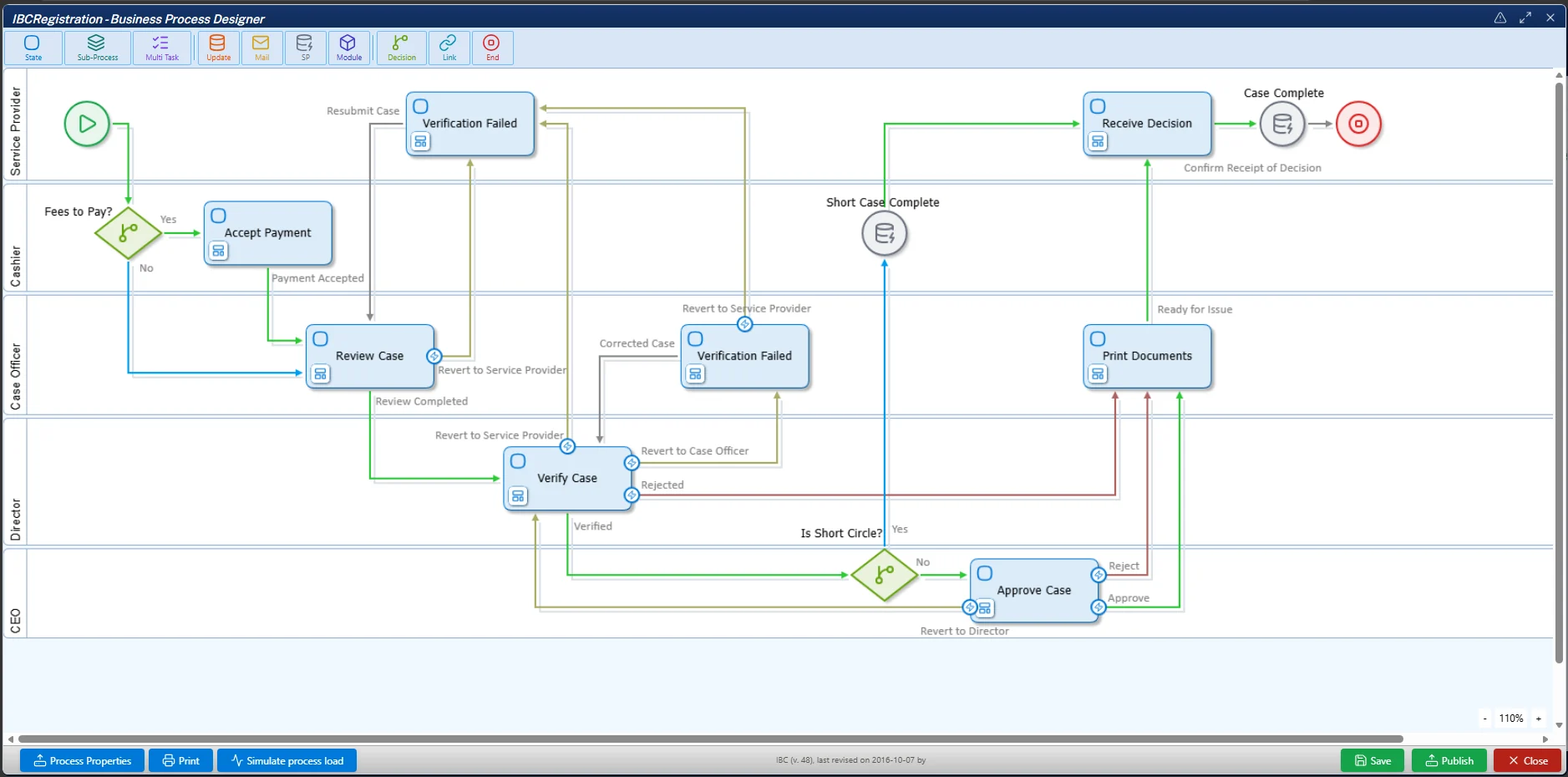
Model a public service in standard notation, run it as an executable process, and watch instances move through it in production.
Case records, document flows and service histories
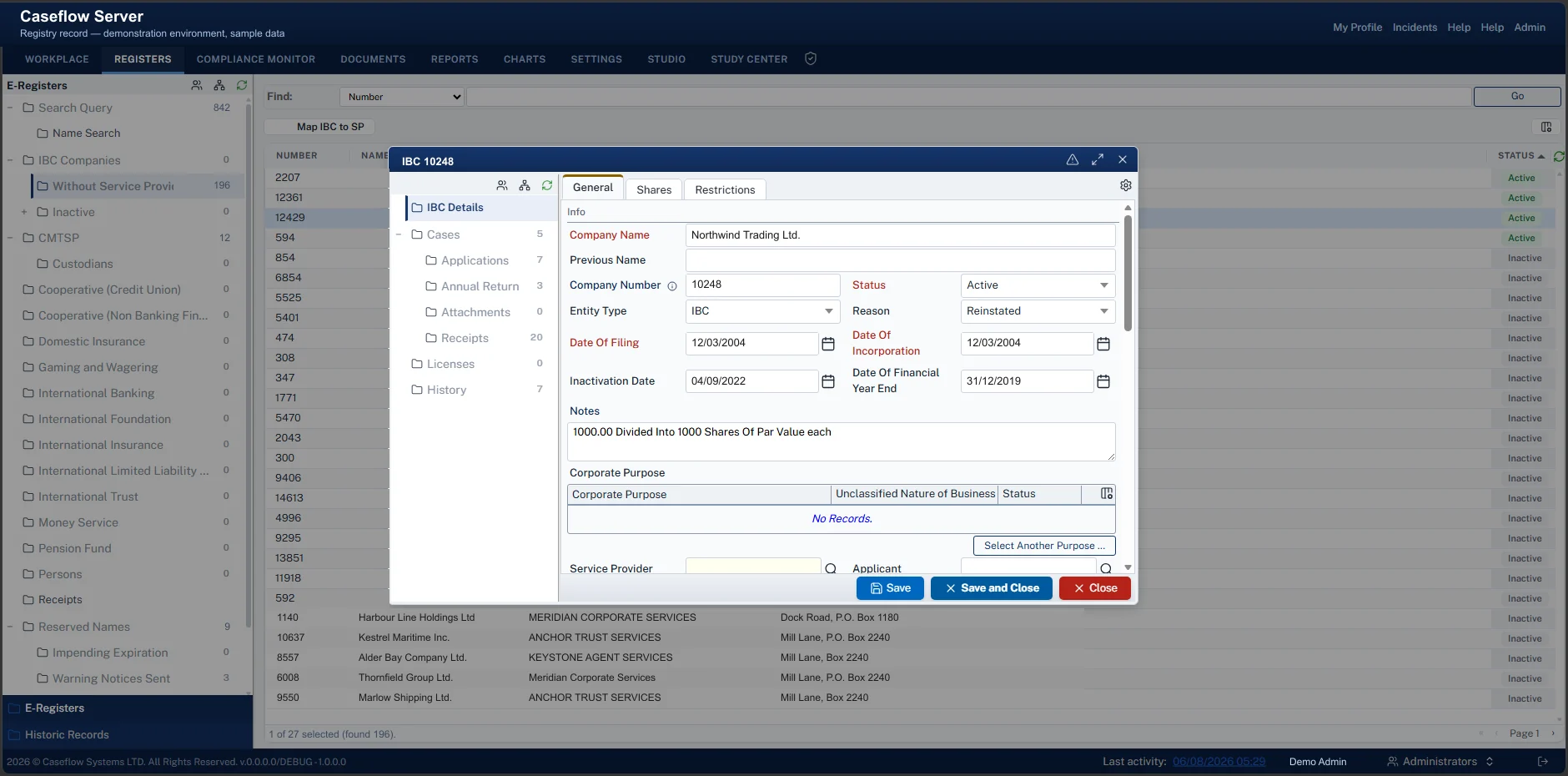
Every application is a case with its own record, attached documents and complete service history from submission to outcome.
Configurable forms, rules, service steps and approvals
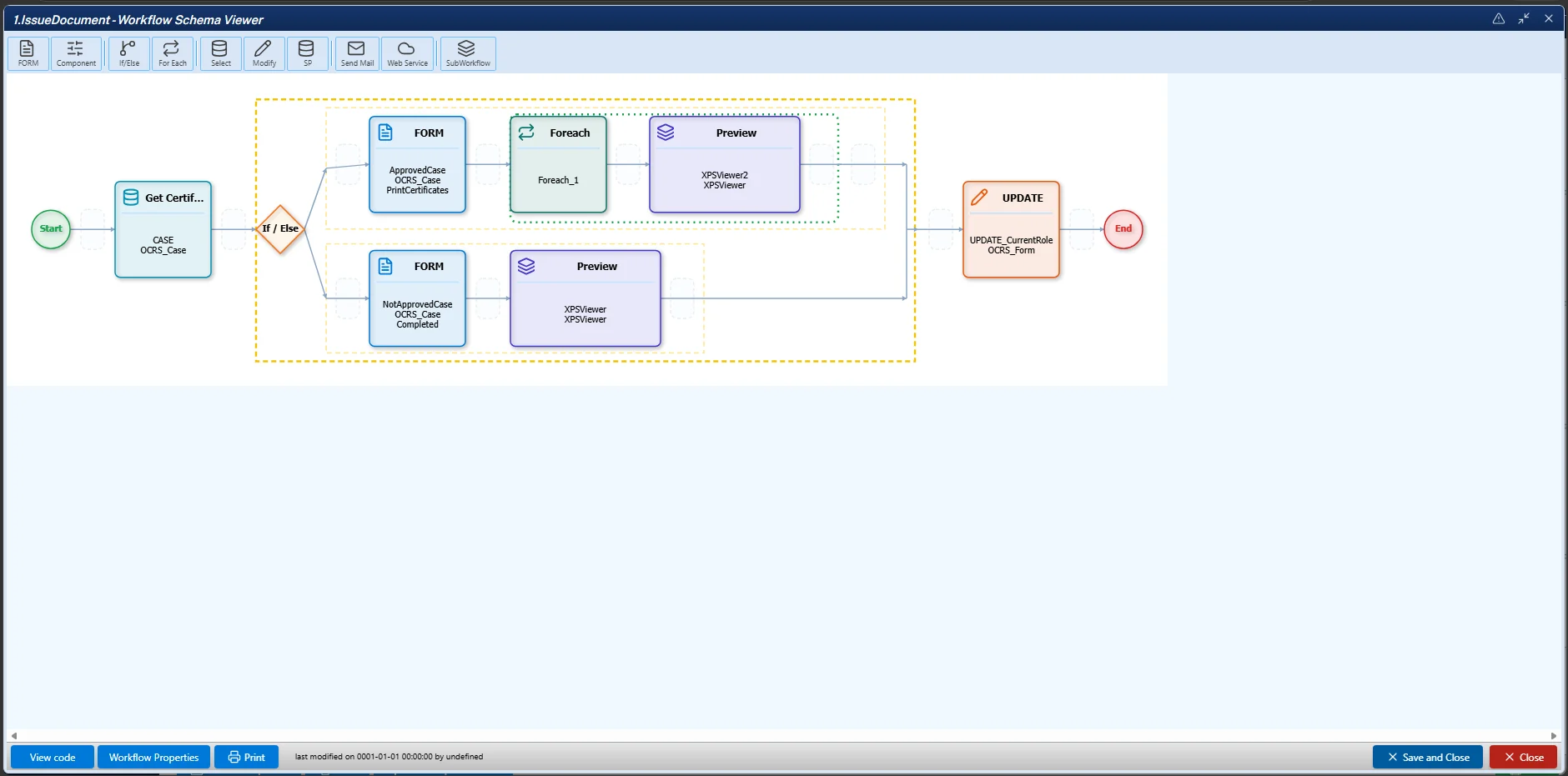
Eligibility rules, form fields, routing and approval chains are configuration, not a development cycle.
Public portals and service directories
A citizen-facing front door where services are discoverable, applications are submitted and status is visible.
Back-office work queues and agency dashboards
Officers receive work in queues shaped by their role, with the caseload, targets and bottlenecks visible to their managers.
API gateway and data exchange integrations
Inter-agency exchange through a governed gateway, with audit trails on every call across an institutional boundary.
Identity, signature, payment, notification and logging services
Shared enablers every service needs, provided once to the whole estate rather than rebuilt inside each project.
Analytics and performance monitoring
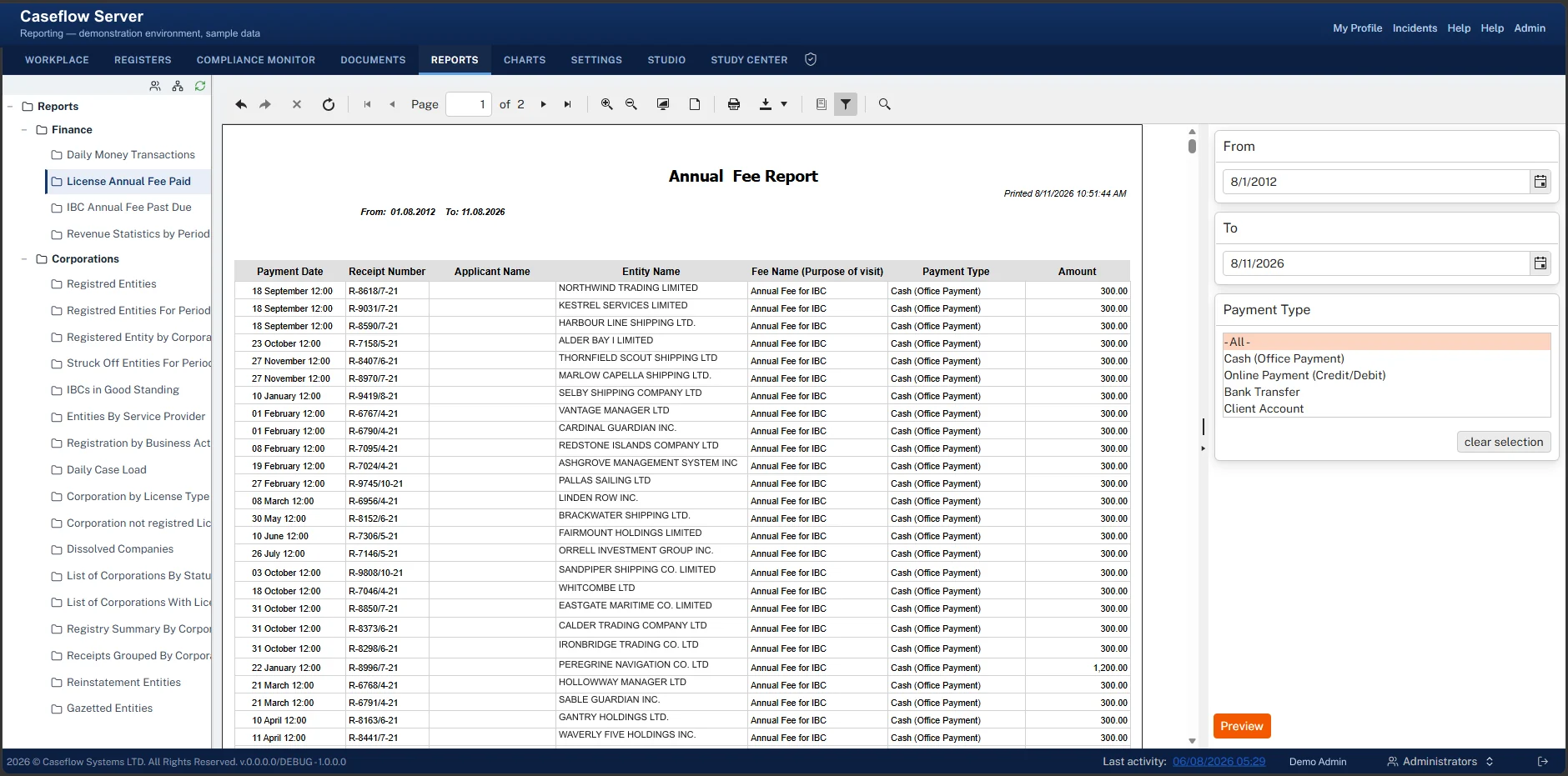
Volumes, durations and outcomes measured per service, so improvement can be evidenced rather than asserted.
Cloud, on-premises or hybrid deployment
Virtual machines, Docker, Terraform and Kubernetes, delivered through DevOps and CI/CD practice, wherever the data must live.
Inside the platform
The module family
Caseflow Server is the core. Every module around it is a participant in the same process, exchanging messages across an institutional boundary rather than duplicating the engine.
Caseflow Server
BPM, workflow execution, case records, forms, rules, APIs, analytics
Caseflow Office
Agency work queues, approvals, processing, issuing, internal dashboards
Citizen Service Portal
Applications, status tracking and document issuance for citizens and businesses
Identity & Access Services
Authentication, onboarding and role-based access
Digital Signature Services
Signing applications, approvals, certificates and official documents
Data Exchange Gateway
API gateway, inter-agency data sharing, interoperability, audit trails
National Data Infrastructure
Citizen, property, business and other authoritative registers
Payment Gateway
Public-service fees, invoices and payment-provider integration
Mobile Government App
Mobile access to identity, services, payments, notifications and records
Geospatial Services
Location-aware service delivery and agency mapping
Public Key Infrastructure
Trust services and certificate infrastructure
Notification Gateway
SMS, email, push and service-journey communications
Platform Administration Console
Administration for identity, payment, PKI and platform configuration
Deployment and operations
Cloud
Managed infrastructure where policy permits it, provisioned as code.
On-premises
Inside the institution’s own data centre, where data residency requires it.
Hybrid
Public channels hosted externally, records and processing kept internal.
Delivered with
- Virtual machines
- Docker
- Terraform
- Kubernetes
- CI/CD pipelines
Deployment choice is a procurement and data-residency decision before it is a technical one. The platform does not force it.
Request a Caseflow Server briefing
A walkthrough with the delivery team: the process designer, a live case moving through a service, the integration model, and how deployment would work in your institution.
Request a briefing